In today’s digital world, your website is more than just an online presence — it is the face of your business. Whether you run a startup, restaurant, ecommerce store, or corporate company, your website maintenance is essential for growth, security, and customer trust.
Many businesses invest heavily in website design and development but ignore ongoing website maintenance. A poorly maintained website can become slow, outdated, vulnerable to hackers, and harmful to SEO rankings.
In 2026, website maintenance is no longer optional. It is a critical part of running a successful business online.
What Is Website Maintenance?
Website maintenance refers to the regular process of updating, monitoring, securing, and improving a website to ensure it performs efficiently.
Website maintenance typically includes:
- Software and plugin updates
- Website security monitoring
- Speed optimization
- Backup management
- Fixing broken links
- Content updates
- Mobile responsiveness checks
- SEO performance monitoring
- Bug fixes and technical support
Regular maintenance keeps your website running smoothly and helps deliver a better user experience.
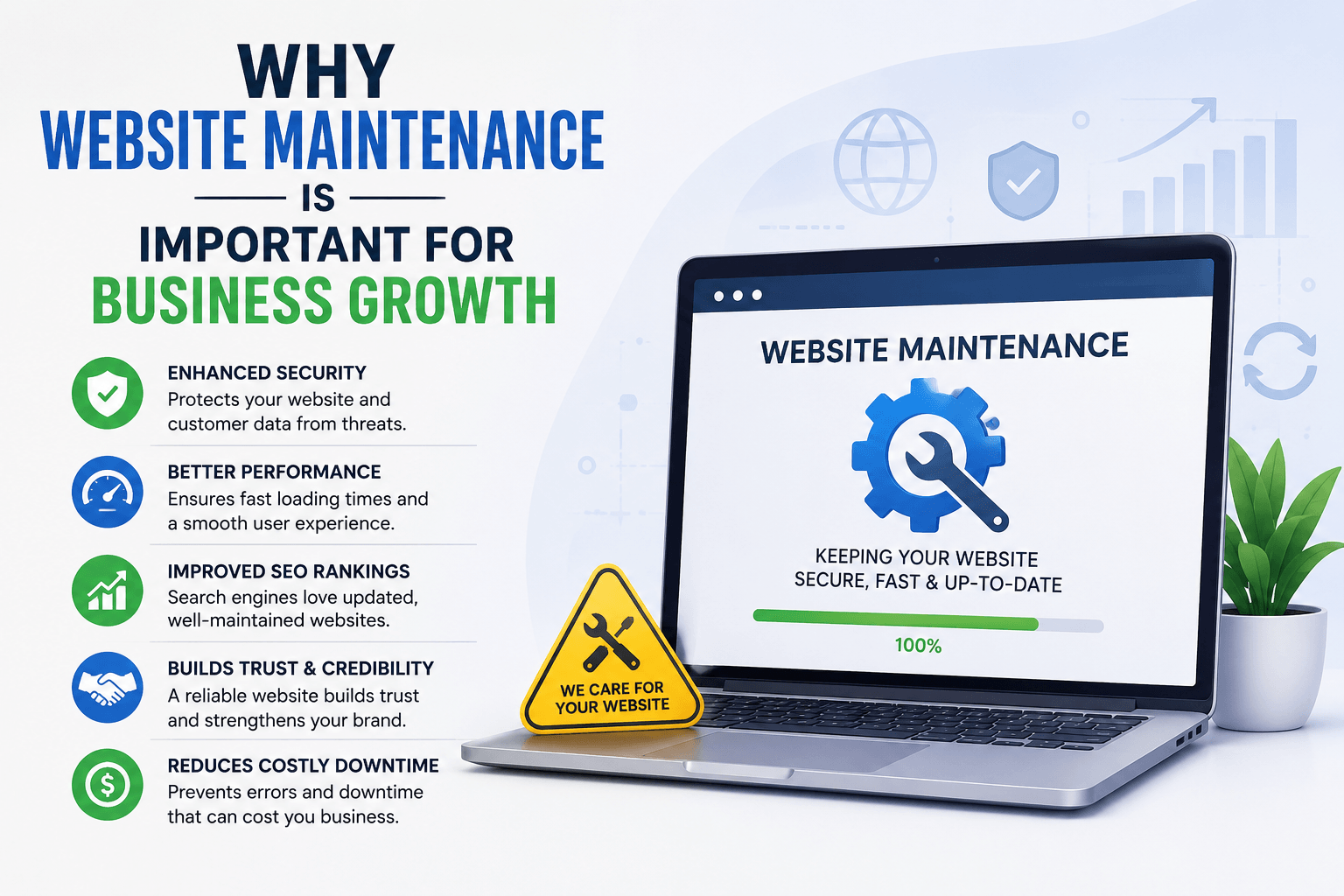
Why Website Maintenance Is Important
1. Improves Website Security
Cyber threats are increasing every year. Hackers often target outdated websites with old plugins, themes, or software vulnerabilities.
Regular website maintenance helps:
- Protect customer data
- Prevent malware attacks
- Reduce hacking risks
- Keep security patches updated
A secure website builds trust with users and protects your business reputation.
2. Boosts Website Speed and Performance
Website speed directly affects user experience and Google rankings. Slow websites often lead to higher bounce rates and lower conversions.
Maintenance helps optimize:
- Images and media files
- Cache performance
- Database cleanup
- Server performance
- Broken scripts
Fast-loading websites improve customer satisfaction and increase engagement.
3. Helps Improve SEO Rankings
Search engines like Google prefer websites that are updated, secure, and technically optimized.
SEO website maintenance includes:
- Fixing broken links
- Optimizing page speed
- Updating content
- Monitoring indexing issues
- Improving mobile performance
Regular updates help maintain and improve your search engine rankings over time.
4. Enhances User Experience
Visitors expect modern, responsive, and error-free websites. If users encounter outdated information, slow loading pages, or technical errors, they may leave immediately.
Website maintenance ensures:
- Smooth navigation
- Mobile-friendly design
- Updated information
- Better accessibility
- Functional contact forms
A positive user experience helps convert visitors into customers.
5. Prevents Website Downtime
Unexpected downtime can result in lost sales, poor customer experience, and damaged credibility.
Routine monitoring and maintenance help identify issues before they become major problems.
This includes:
- Server monitoring
- Error detection
- Backup recovery
- Performance tracking
Reliable websites create stronger customer confidence.
6. Keeps Your Content Updated
Outdated content can make a business look inactive or unprofessional.
Regular content updates help:
- Improve SEO
- Increase engagement
- Provide accurate information
- Promote new services or products
Fresh content also signals search engines that your website is active and relevant.
7. Supports Business Growth
As your business grows, your website needs to evolve too.
Website maintenance allows businesses to:
- Add new features
- Improve functionality
- Scale performance
- Integrate modern technologies
- Stay competitive in the market
An updated website helps businesses adapt to changing customer expectations.
Common Website Maintenance Tasks
Here are some important maintenance activities businesses should perform regularly:
| Maintenance Task | Importance |
|---|---|
| Website Backups | Prevents data loss |
| Security Updates | Protects against cyber threats |
| Speed Optimization | Improves user experience |
| SEO Monitoring | Maintains search rankings |
| Bug Fixes | Ensures smooth functionality |
| Content Updates | Keeps website relevant |
| Mobile Testing | Improves mobile usability |
How Often Should a Website Be Maintained?
Website maintenance should be performed regularly depending on the website type and traffic.
Recommended Maintenance Schedule:
- Weekly: Backups, security scans, plugin updates
- Monthly: SEO checks, speed optimization, bug fixes
- Quarterly: Design improvements and performance audits
- Annually: Full website review and technology upgrades
Consistent maintenance prevents major technical issues in the future.
Signs Your Website Needs Maintenance
You may need website maintenance if:
- Your website loads slowly
- Pages show errors
- Security warnings appear
- Search rankings are dropping
- The design looks outdated
- Forms are not working properly
- Mobile experience is poor
Ignoring these signs can negatively affect your business.
Why Businesses Should Hire a Website Maintenance Company
Professional website maintenance services save time and ensure your website remains secure and optimized.
A website maintenance company can help with:
- Technical support
- Regular monitoring
- SEO improvements
- Security protection
- Performance optimization
This allows businesses to focus on growth while experts manage the website.
Final Thoughts
Website maintenance is essential for business success in 2026. A well-maintained website improves security, SEO rankings, speed, and customer experience while helping businesses stay competitive online.
Instead of treating website maintenance as an extra expense, businesses should see it as a long-term investment in growth and digital success.
If you want your website to generate leads, build trust, and perform effectively, regular maintenance is the key.
For additional information, go to www.soltervision.com, our website. You can email us at Email Us.