In 2026, your website is more than an online business card. It is one of your most important digital marketing and sales tools. When potential customers visit your website, they expect a fast, professional, mobile-friendly, and easy-to-use experience.
Unfortunately, poor website design can cause businesses to lose customers, even when they offer excellent products or services.
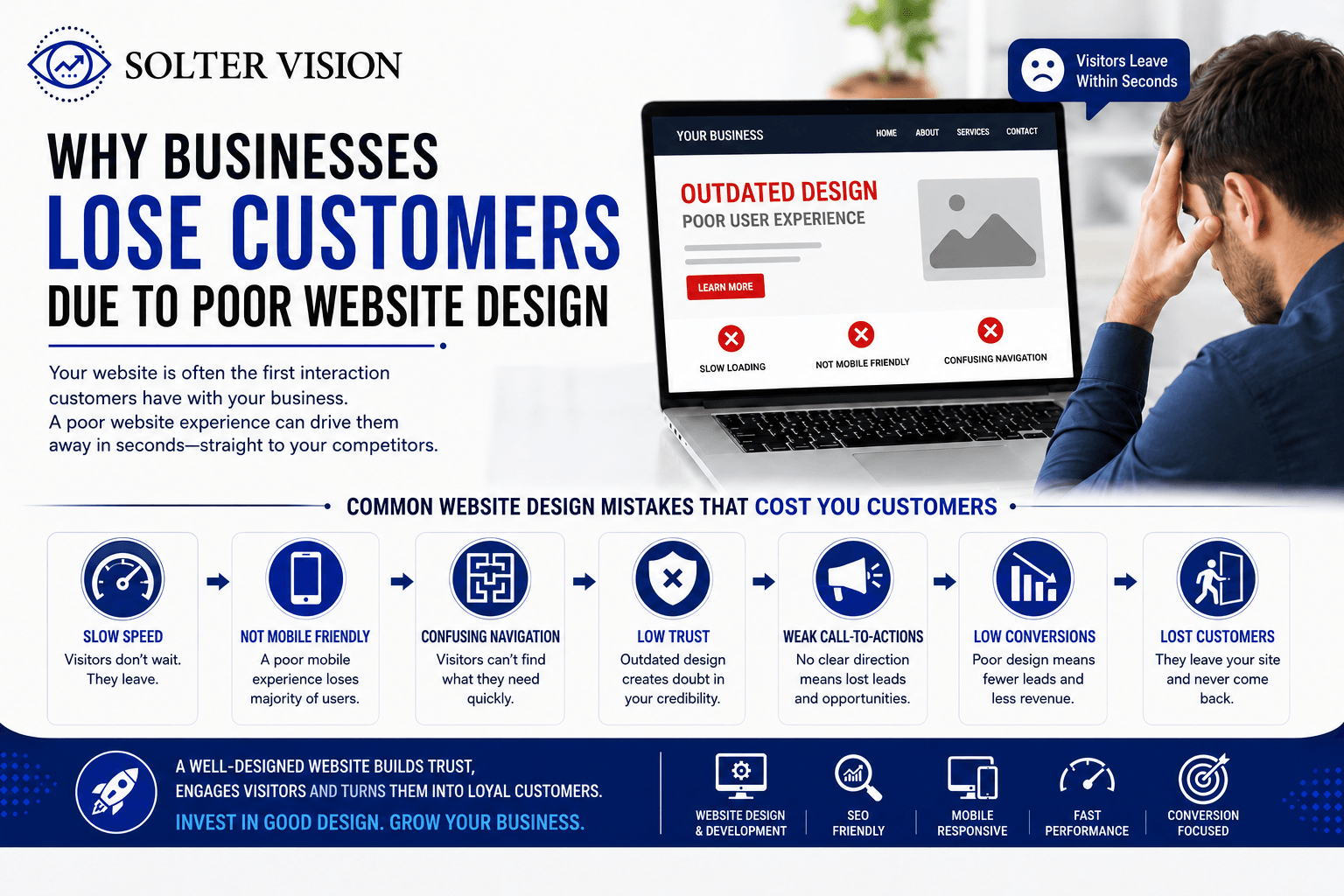
A confusing layout, slow loading speed, outdated design, difficult navigation, poor mobile experience, or unclear call-to-action can encourage visitors to leave and choose a competitor instead.
For businesses investing in SEO, social media, paid advertising, and other digital marketing strategies, this is especially important. Driving visitors to your website is only the first step. Your website must also provide an experience that encourages visitors to stay, engage, and convert.
What Is Poor Website Design?
Poor website design refers to a website that is difficult to use, visually outdated, slow, confusing, inaccessible, or ineffective at helping users find information and complete desired actions.
Common examples include:
- Slow-loading web pages
- Poor mobile responsiveness
- Complicated navigation
- Outdated website layouts
- Low-quality images
- Difficult-to-read content
- Weak calls-to-action
- Broken links
- Poor website structure
- Excessive pop-ups
- Inconsistent branding
- Missing contact information
- Poor user experience
These issues can negatively affect both customer trust and website conversions.
1. Poor First Impressions Can Cost You Customers
Your website is often the first place potential customers interact with your brand.
If visitors see an outdated design, cluttered homepage, poor-quality graphics, or inconsistent branding, they may immediately question the professionalism of your business.
A modern business website should communicate:
- Professionalism
- Credibility
- Trust
- Quality
- Value
- Reliability
A strong first impression can encourage visitors to explore your website. A poor first impression can make them leave.
2. Slow Website Speed Increases Customer Drop-Off
Website speed is one of the most important parts of modern website performance.
Visitors expect websites to load quickly, particularly on mobile devices. If a website takes too long to display its content, users may abandon the page before discovering your products or services.
Slow websites can contribute to:
- Higher bounce rates
- Lower engagement
- Fewer leads
- Lower conversions
- Poor user experience
Businesses should regularly optimize images, scripts, code, caching, hosting, and other performance factors.
3. Poor Mobile Design Can Lose Mobile Customers
A website that looks good on a desktop may still provide a poor experience on smartphones.
Responsive web design ensures that website content automatically adapts to different screen sizes.
A mobile-friendly business website should have:
- Responsive layouts
- Readable fonts
- Properly sized buttons
- Simple navigation
- Optimized images
- Fast loading times
- Easy-to-use forms
- Click-to-call functionality where appropriate
If visitors struggle to use your website on their phones, they may quickly move to another business.
4. Complicated Navigation Frustrates Visitors
Website visitors should not have to search through multiple pages to find basic information.
Poor navigation can happen when:
- Menus contain too many options
- Important pages are difficult to find
- Links are unclear
- Contact information is hidden
- Page structures are inconsistent
A professional website should use a clear navigation structure that helps visitors quickly find services, products, company information, contact details, and other important content.
5. Weak Calls-to-Action Reduce Conversions
One of the most common website design mistakes is failing to tell visitors what to do next.
A website visitor might be interested in your service but leave because there is no obvious next step.
Use clear calls-to-action such as:
- Get a Free Quote
- Contact Us
- Book a Consultation
- Request a Demo
- Get Started
- Learn More
- Shop Now
Strategically placed CTAs can make the customer journey easier and improve conversion opportunities.
6. Outdated Website Design Can Damage Brand Credibility
An outdated website can make a business appear less professional.
Design trends, technology, user expectations, and search engine requirements continue to evolve. A website that was effective several years ago may no longer provide the same user experience today.
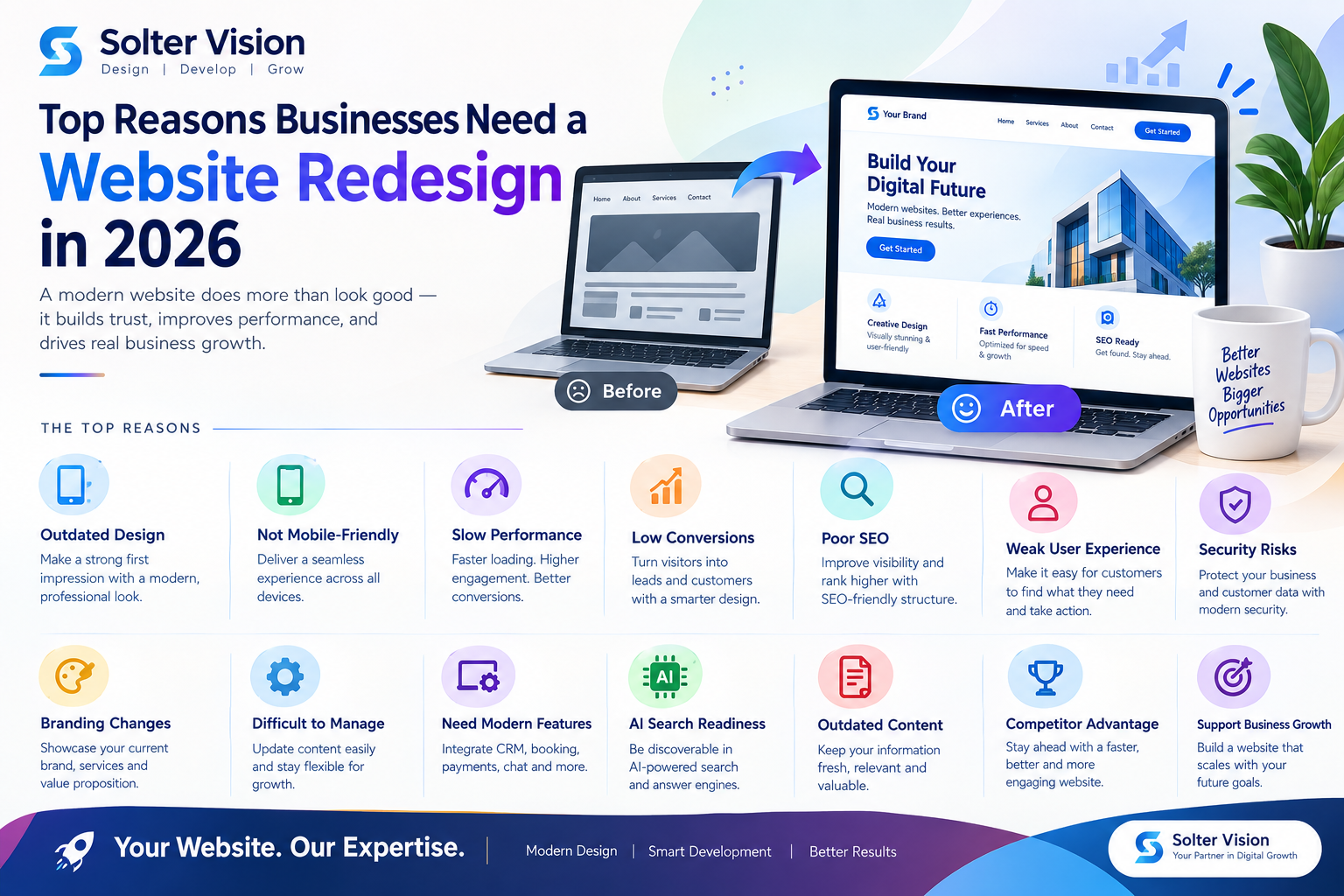
Signs your website may need a redesign include:
- Outdated visual design
- Poor mobile experience
- Slow performance
- Difficult navigation
- Old or inaccurate information
- Low-quality visuals
- Declining leads
- Weak conversion rates
- Poor search visibility
A strategic website redesign can improve both user experience and business performance.
7. Poor User Experience Can Drive Potential Customers Away
User experience, commonly called UX, focuses on how easily and effectively visitors can interact with your website.
A good website UX makes it easy for visitors to:
- Understand your business
- Find relevant information
- Explore your services
- Trust your brand
- Contact your business
- Complete an intended action
Poor UX creates friction at every stage of the customer journey.
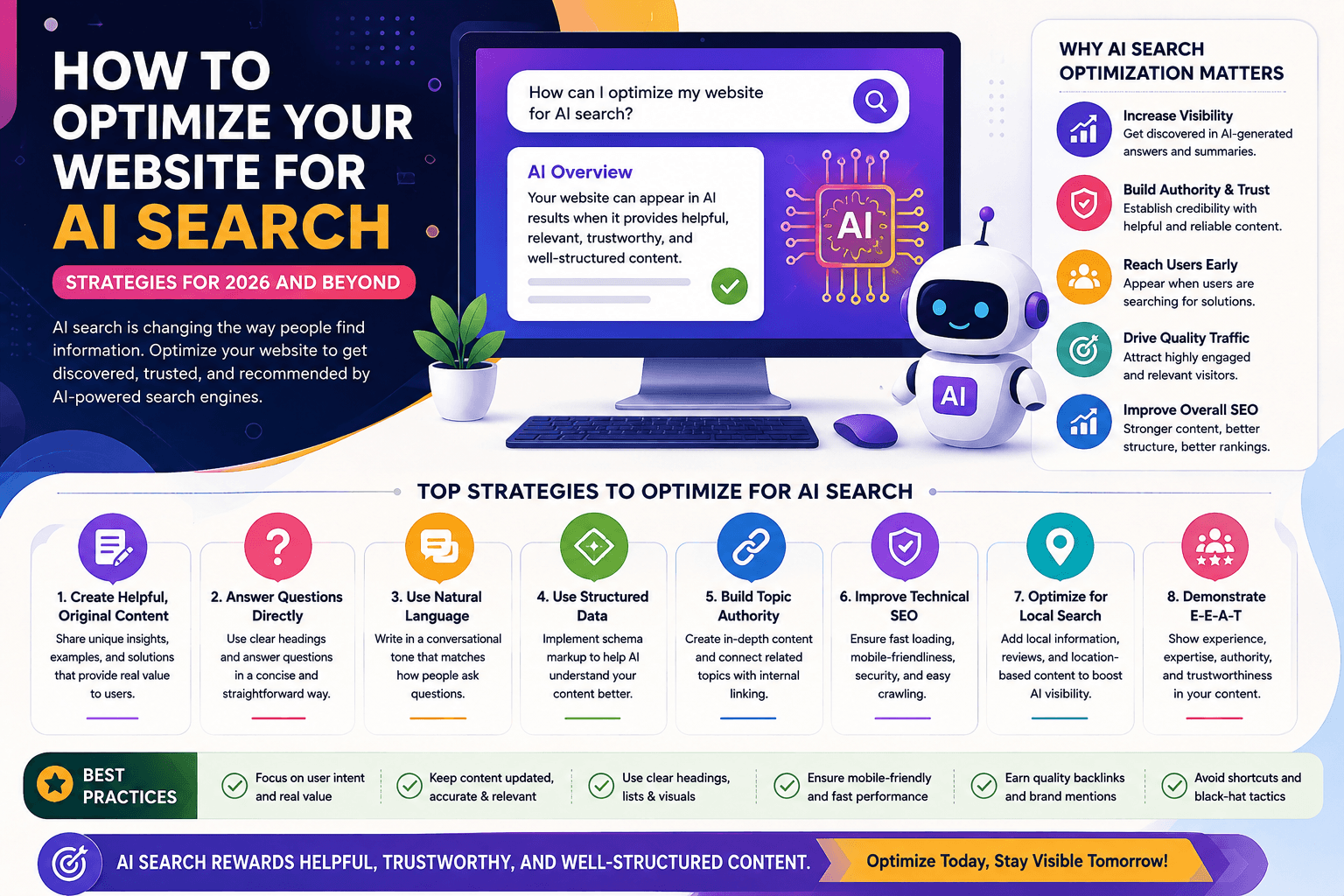
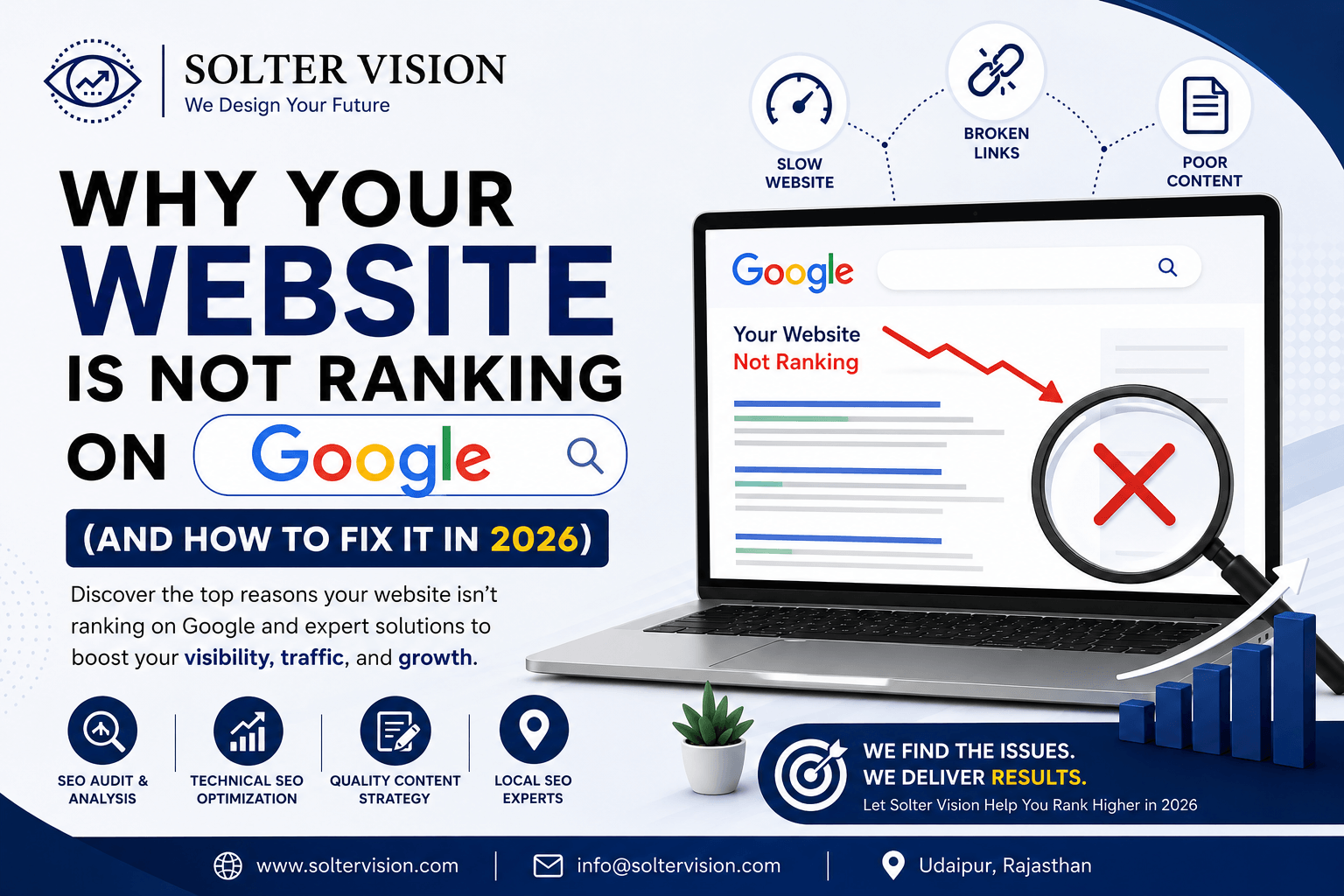
8. Poor Website Structure Can Affect SEO
Website design and SEO should work together.
An SEO-friendly website should have a logical structure that allows users and search engines to understand the relationship between pages and content.
Important elements include:
- Clear heading hierarchy
- Descriptive page titles
- Optimized meta descriptions
- Internal linking
- Clean URLs
- Image optimization
- Mobile responsiveness
- Fast page performance
- Useful, original content
- Proper technical SEO
A beautiful website that cannot be properly crawled, understood, or discovered can still struggle to generate organic traffic.
9. Confusing Content Can Reduce Customer Engagement
Website content should be easy to scan and understand.
Large blocks of text, complicated terminology, unclear headlines, and weak messaging can make visitors lose interest.
Improve website readability by using:
- Short paragraphs
- Descriptive headings
- Bullet points
- Relevant visuals
- Clear language
- Strategic whitespace
- Strong subheadings
This structure can also make content easier for search engines and AI-powered search experiences to understand.
10. Lack of Trust Signals Can Reduce Conversions
Before contacting or purchasing from a business, customers often look for signals that establish credibility.
Consider adding:
- Customer reviews
- Testimonials
- Case studies
- Certifications
- Portfolio examples
- Secure payment options
- Business information
- Contact details
- FAQs
- Clear policies
Trust signals can reduce uncertainty and help potential customers feel more comfortable taking the next step.
11. Poor Forms Can Cause Lead Loss
Your website may attract visitors but still lose leads because of complicated forms.
Long forms requiring unnecessary information can discourage users from submitting an inquiry.
For most basic lead-generation websites, forms should be:
- Simple
- Short
- Easy to understand
- Mobile-friendly
- Clearly labeled
- Supported by a strong CTA
Only ask for information that is genuinely necessary at that stage of the customer journey.
12. Poor Website Design Can Waste Your Marketing Budget
Imagine spending money on Google Ads, SEO, social media marketing, or content marketing to bring hundreds of visitors to your website—only for those visitors to leave because the website is difficult to use.
This creates a serious gap between traffic generation and conversion optimization.
Your marketing strategy should therefore follow this process:
Traffic → Website Experience → Engagement → Trust → Conversion
If the website experience fails, the entire marketing funnel can suffer.
How to Know If Your Website Needs a Redesign
Ask yourself these questions:
- Is my website mobile-friendly?
- Does it load quickly?
- Is the navigation simple?
- Does the homepage clearly explain what my business does?
- Can customers easily contact me?
- Are my calls-to-action clearly visible?
- Does the website look modern?
- Is my content easy to read?
- Are important pages optimized for SEO?
- Is the website generating enough leads?
- Does the website reflect my current brand?
- Are visitors leaving without taking action?
If you answered “no” to several of these questions, a website redesign or UX improvement may be worth considering.
How to Improve Poor Website Design
Businesses can improve their website performance by focusing on five major areas:
1. Improve Website Speed
Compress images, optimize code, reduce unnecessary scripts, use browser caching where appropriate, and choose reliable hosting.
2. Make the Website Mobile-Friendly
Use responsive layouts and test important pages across different screen sizes.
3. Simplify Navigation
Keep menus organized and make important pages easy to find.
4. Strengthen Website Content
Create useful, relevant content that answers customer questions and clearly communicates your products or services.
5. Improve Conversion Elements
Use clear CTAs, simple contact forms, testimonials, trust signals, and easy-to-follow customer journeys.
Why Professional Website Design Matters in 2026
In 2026, businesses need websites that combine design, performance, SEO, accessibility, user experience, and conversion strategy.
A professional website should not simply look attractive. It should help your business:
- Build trust
- Generate leads
- Increase engagement
- Improve online visibility
- Support SEO
- Strengthen branding
- Convert visitors into customers
Your website should function as an active part of your digital marketing strategy.
Final Thoughts
Poor website design can cost businesses customers, leads, sales, and credibility.
A slow, outdated, confusing, or non-responsive website can push potential customers toward competitors with better online experiences.
Investing in professional website design, responsive development, SEO, performance optimization, and user experience can help businesses create a stronger digital presence and improve conversion opportunities.
At Solter Vision, we help businesses build modern, responsive, SEO-friendly websites designed around their brand, audience, and business goals.
If your current website is not generating the results you expect, it may be time to evaluate what is preventing visitors from becoming customers.
A good website attracts visitors. A great website gives them a reason to stay and take action.
FAQ
What is poor website design?
Poor website design is a website that provides a difficult, confusing, outdated, slow, or ineffective experience for visitors. Common problems include poor navigation, slow loading, weak mobile responsiveness, cluttered layouts, and unclear calls-to-action.
How does poor website design affect a business?
Poor website design can reduce customer trust, increase visitor drop-off, decrease leads and conversions, and negatively affect the overall effectiveness of digital marketing campaigns.
Does website design affect SEO?
Yes. Website performance, mobile usability, site structure, content organization, internal linking, and other technical and UX factors can influence how effectively a website performs in search.
When should a business redesign its website?
A business should consider a website redesign when its website is outdated, difficult to use, not mobile-friendly, slow, difficult to maintain, poorly optimized for search, or no longer supports its business goals.
How can a website increase conversions?
A website can improve conversions through clear messaging, strong calls-to-action, fast loading speeds, responsive design, simple navigation, trust signals, optimized forms, and a smooth user experience.
For additional information, go to www.soltervision.com, our website. You can email us at Email Us.